The best camera is the one you have with you
Scoopshot was a mobile photography product connecting photographers with media companies and other organisations looking for images. Photographers could respond to assignments, share their work and offer photographs for sale.
I joined Scoopshot as design lead in 2012, working across the mobile experience, new features, engagement concepts, UI, identity and marketing.
I was already a keen photographer, making personal work as well as product photographs and video for clients. My friend Jarno told me Scoopshot was looking for a designer. A mobile-photography startup felt unusually close to the things I was already doing, so I joined.
There had to be something worth opening
A newsworthy photograph is a matter of timing. That makes it a poor basis for everyday engagement: most people are not standing beside a breaking story when they open their phone.
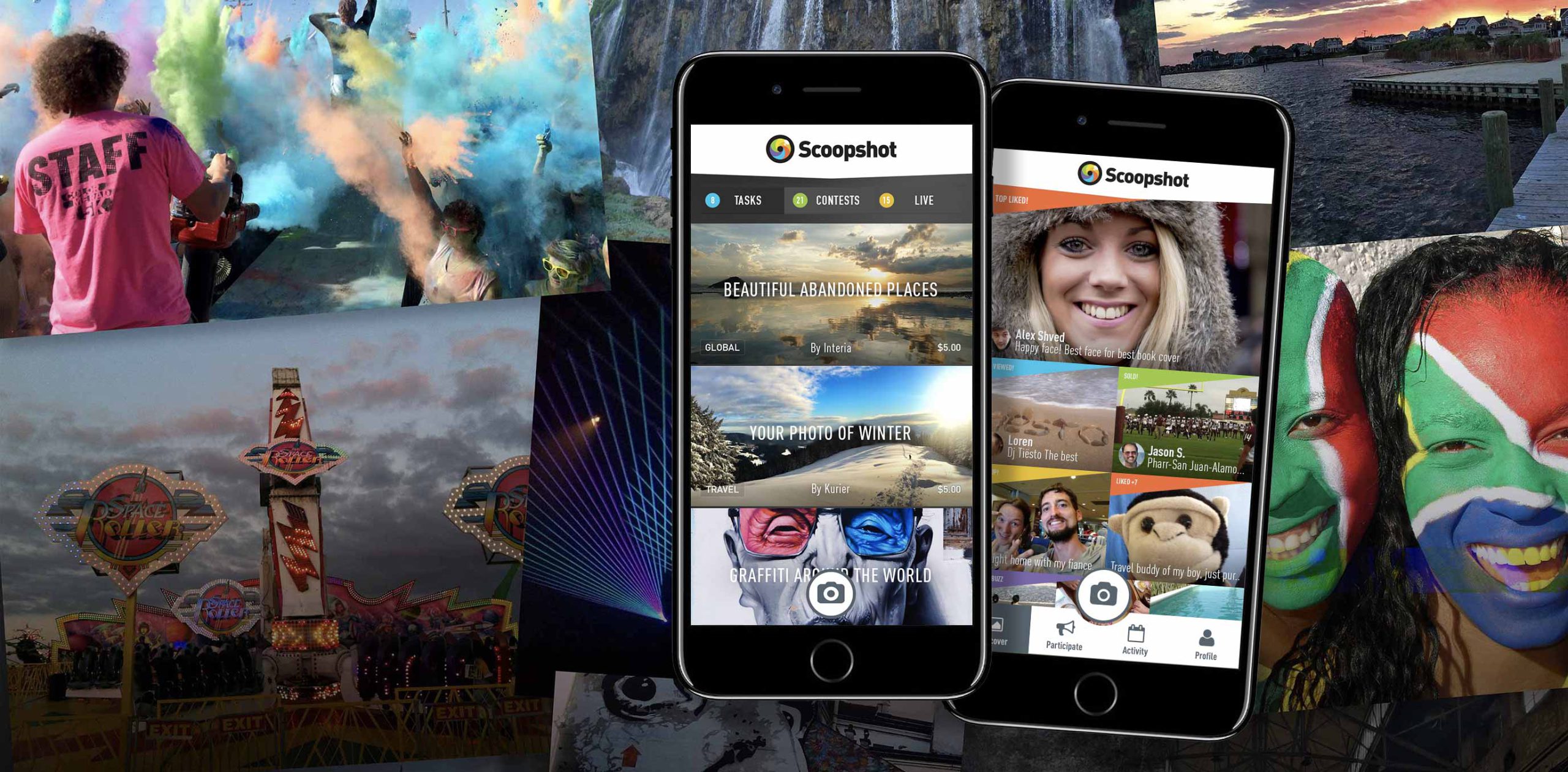
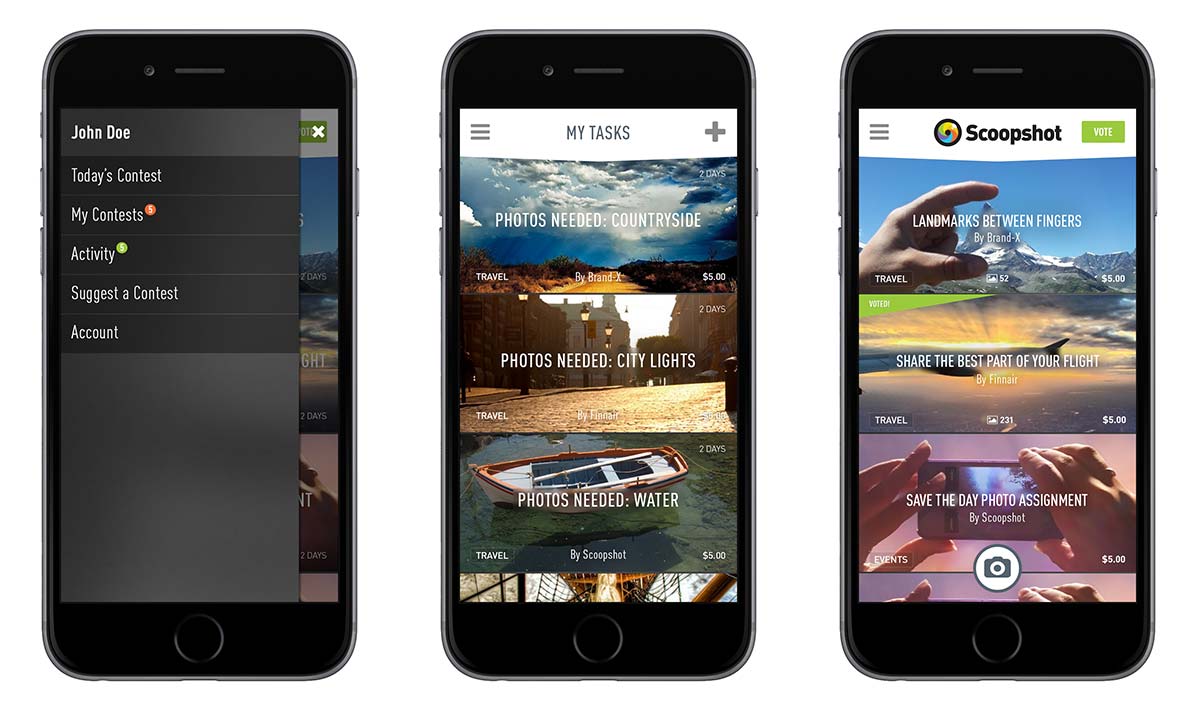
Assignments gave photographers something concrete to do. They could open Scoopshot, see whether somebody needed a photograph nearby, and take part through the mobile experience. Improving that experience and designing new features for it were central parts of my role.
We let other people set the assignment
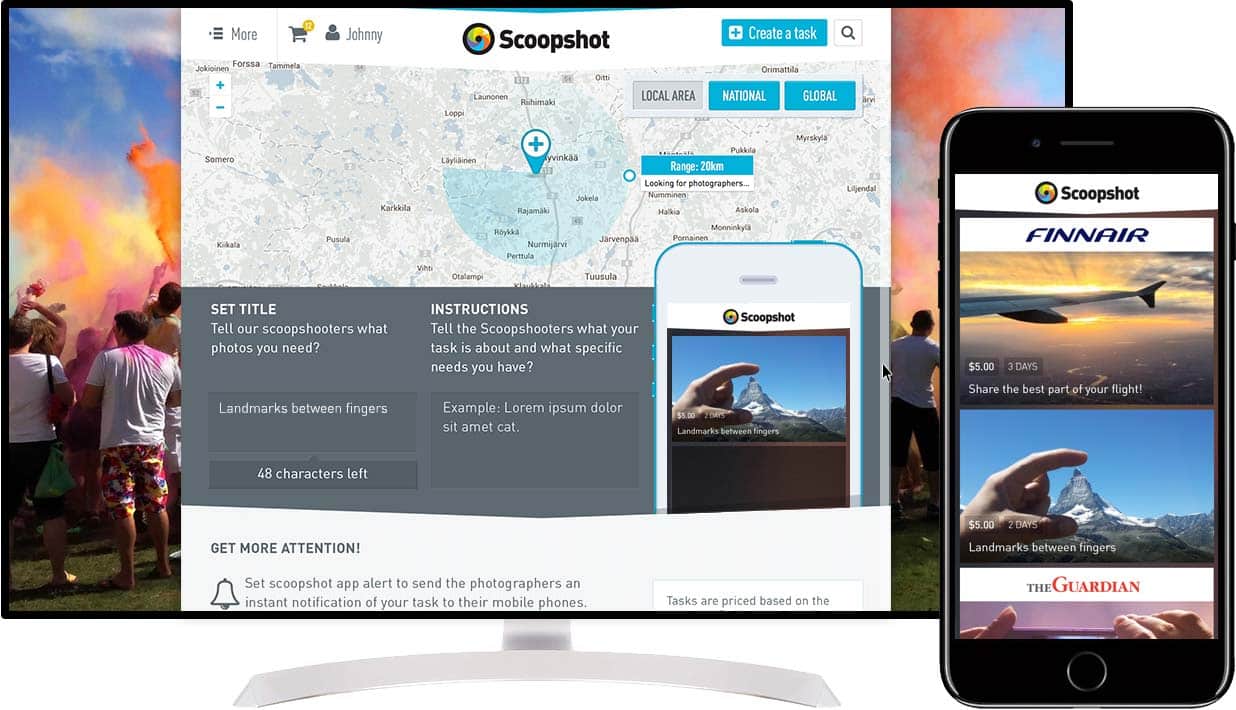
Once I knew the product better, Jussi and I explored a broader task model. The idea was to let photographers, agencies and smaller businesses create assignments for the community themselves.
Jussi was one of the hardest-working people I had met. We became close colleagues quickly, which mattered because the list of product and marketing work was much larger than one designer could comfortably carry alone.
I made drafts for the team, and with their support we spent about six months building Scoopshot 2.0 before launching it in late 2013. We did not get to see the idea’s full potential: after new funding, the product direction changed, and moderating the task model was more than the small startup could support at the time.
The next direction put rating at the centre
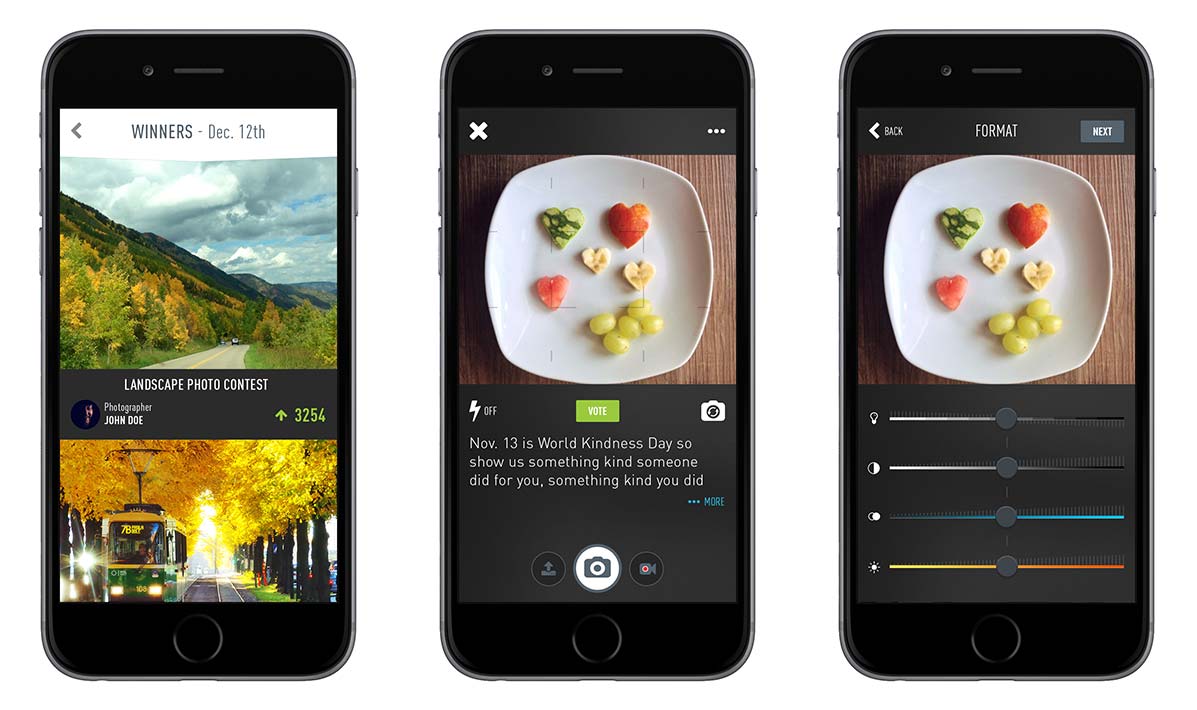
The later concept used a swipe interaction for rating other photographers’ images. It was a more gamified direction, and I designed UI for it.
I left Scoopshot in 2014 but continued part-time to finish the last app version. A new UI designer had joined by then. The English source records my mixed feelings about the direction and makes clear that the later interface was not solely my work.
The screens show how much territory the product covered: task lists and creation, taking and uploading photographs, voting, winners and image adjustment. They are product presentations rather than proof that I designed every screen shown; an unnamed UI designer joined during the later phase.
The product also needed a face
My responsibility extended beyond the interface. I designed a new Scoopshot logo and worked on print and other marketing material. That breadth was part of working as design lead in a startup: product, identity and communication had to move together.

Two years moved quickly
During two years at Scoopshot I felt I learned more than during the previous ten. Some former colleagues later became clients, and I stayed in frequent contact with several of them.