

Travel sites pioneer
Tripsay
The product had insight.
But it didn’t quite translate into feeling.
Tripsay had been built by experienced travellers, and you could tell. There were genuinely good ideas in it — things the competing services did not have. It even brought real-world material into the product through services such as Flickr.
Over time, all those ideas had made the service rather heavy. There was a lot to take in, and the structure had not quite caught up with everything the founders knew.
Using it could feel like work. The experience was dense and, somehow, a little flat.
We had built the product around what the founders knew
The founders understood travel. That was never in doubt.
But choosing a destination rarely begins with information. Usually something catches your eye first. You see a place and start imagining yourself there.
We rebuilt the experience around that moment.
Instead of asking the user to compare destinations, Tripsay gave them a way to explore the kind of trip they might want to take — and perhaps the kind of person they might be while taking it.
Once that felt right, the information became easier to deal with. Browsing no longer felt quite so much like research. Progress through the service began to feel more like planning a real trip.
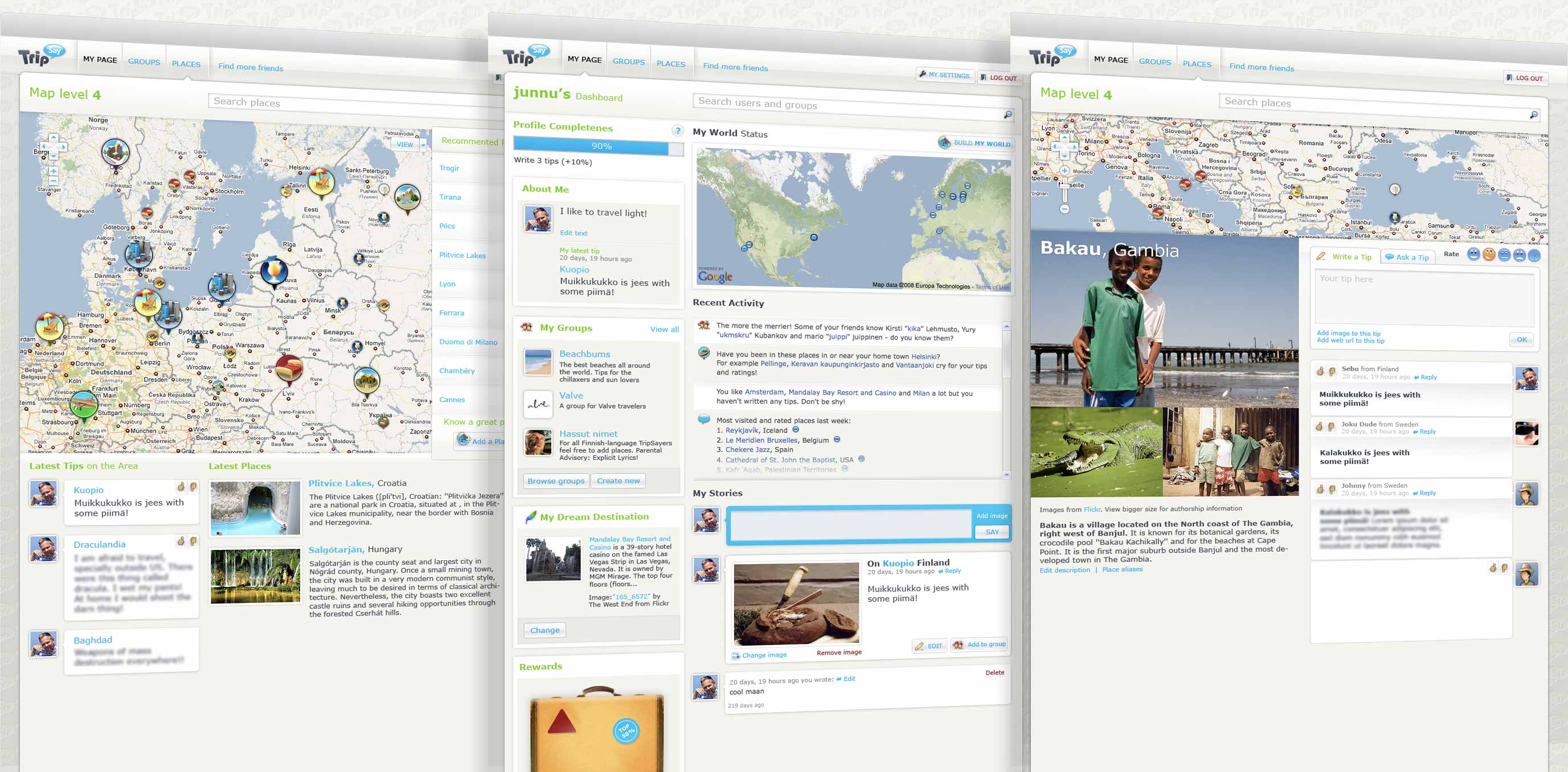
The launch changed how the team saw its own product
When we launched the new version, the difference was larger than the team had expected.
The visual change made the original idea easier to see. After the launch, the team could explain Tripsay without having to talk around it. They also seemed more comfortable showing it to people.
Tripsay was also noticed outside the company. It won three categories at the Grand One awards.
For a while, things looked rather good.
Then the iPhone changed the rules
Tripsay had been built at an awkward moment.
The iPhone had just been introduced, but many people still expected Nokia to keep its position. In Finland this did not sound especially foolish. It was a fairly reasonable view at the time.
The market moved faster than expected.
Travel services began moving onto phones, while Tripsay remained on a different path. In hindsight, the important part seems obvious: a travel service had to travel with the user.
It was much less obvious while it was happening.
Tripsay disappeared, but the team stayed together
I would still have liked to see Tripsay succeed.
It did not. But the people behind it had learned to work together unusually well, and they continued with something new.
Today, they are known as one of the strongest IT teams in Finland.
Tripsay eventually closed. The team continued working together, and the company they built next grew out of that collaboration.
2008
Tripsay Awards
GranD One
Honourary mention
B2C-Service
GranD One
Honourary mention
Information Design
GranD One
Honourary mention
Startup