
Product clarity
Ruokangas Guitars



A case study in conviction, complexity,
and what clarity actually costs.
Juha Ruokangas is both my favorite client and my worst nightmare.
He’s stubborn, relentless, and unusually honest.
A romantic who dares to think big — to the point where “impossible” simply doesn’t register.
Juha has a rare gift:
he pulls people into his vision until they start to believe in it as much as he does.
Over the years, that has meant impossible demands, unrealistic expectations,
and ideas that felt completely detached from reality.
And more often than I’d like to admit — he wasn’t wrong.
The IT Bubble Burst — and So Did My Career
In 2000, I left Razorfish to start a company with a friend. A year later, the dot-com bubble collapsed — and so did we.
I kept myself afloat with small projects from old clients. Not enough to grow, but enough to get by. What I had plenty of, though, was time.
So I drifted back to something more familiar. Music.
I started thinking about a new guitar. Then I came across a small article about a builder named Juha Ruokangas — someone who claimed to make the best guitars in Finland. Maybe the best in the world.
That was enough.
GAS — Guitar Acquisition Syndrome — hit hard. And before I knew it, I was standing in his workshop, surrounded by the smell of exotic woods, trying to understand what made these instruments different.
He Threw Me Out
Juha knew I was a web designer. It didn’t take long before we were talking about his website — which he had built himself in Microsoft FrontPage.
He was proud of it. Said it was better than anything his competitors had.
I listened. Then I told him what I thought.
That it wasn’t just the ugliest site I’d seen in a while — the usability was also, to put it mildly, a problem.
He didn’t take it well.
He threw me out.
The Return
My guitar fever didn’t go away.
So I went back.
I told myself I’d keep it practical this time. Offer a few concrete suggestions. Maybe repair the damage. Maybe earn my way back to the actual reason I’d shown up in the first place — the guitar.
I knocked on the workshop door again.
Juha raised an eyebrow, but let me in.
We talked for hours. Guitars. The internet. Craft. Standards. Slowly, the tension gave way to something else.
Respect.
From that point on, our communication was unusually direct. No politeness theatre. No soft edges.
Sometimes brutal.
But it worked.
That kind of honesty is what made the relationship last — and what made the work possible.

The Challenge
Juha’s days were disappearing into email.
Customers weren’t just asking about specs. They wanted to know what their guitar would actually look like once all the choices came together. They needed reassurance. An expert opinion. Every time.
The problem wasn’t demand:
- it was uncertainty.
- and email didn’t scale.
- he needed a better answer.
The Big Idea
Car manufacturers had started to offer configurators online. I had seen it firsthand with Peugeot.
Juha wanted the same.
Not as a gimmick — but as a way to answer the question he kept getting in his inbox: what will my guitar actually look like?
In 2001, Flash was the obvious choice for interactive interfaces.
There was just one problem.
I had never written a single line of Flash code.
I said yes anyway.
Payback
I worked day and night to build what I thought was the perfect site.
When I finally presented it to Juha, I expected some kind of reaction.
There was none.
No praise. No acknowledgment.
Instead, he told me the design wasn’t good enough — and the usability still had problems.
Then he gave me homework.
Study heraldry. Look at Art Nouveau. Go to an antique shop and pay attention to how real quality feels. Listen to the sound of a cheap car door versus a luxury one.
Then come back with better ideas.
I was stunned.
Who does this guy think he is?
But I stayed.
We kept talking. Exchanging ideas. Challenging each other.
Juha demanded a lot — but no more than he demanded from himself. He wrote every word on the site. He listened when I pushed the copy further.
At some point, something shifted.
I had his respect.
And now we were raising the bar together.
Eventually, I found a direction that felt right to both of us.
It was the best work I had done up to that point.
Then came the part I had underestimated.
The configurator.
I thought it would take a weekend. Maybe two.
It took over a year.
I did everything myself — the concept, the interface, the visuals, the front-end, the logic. All of it.
The Launch
It worked.
Guitar forums filled up with designs created in the configurator. Players started exploring ideas they hadn’t considered before. What had been a slow, expert-driven process became intuitive — even playful.
The tool didn’t just display options.
It unlocked imagination.
Juha’s business grew. And the work was recognized with the 2002 MindTrek Award for Best Innovation.
An Impossible Mission
By 2009, I was working at Valve — surrounded by some of the best designers in the country.
That’s where I met Juha Javanainen. Java.
A brilliant programmer. A serious guitarist. Same taste in music, same level of obsession with the details that matter.
I thought he’d be the perfect partner for what I assumed would be a light refresh of the Ruokangas site.
I was wrong about the scope.
But right about the partner.
Flash Is Dead?
There were already rumors that Apple might block Flash.
I didn’t take them seriously.
Adobe was too big. Too established. Surely they’d win.
So we moved forward.
- WordPress as the foundation.
- Flash for Guitar Creator.
HTML5 was still immature — Flash was the only tool that could deliver the level of interaction we needed.
It felt like a safe bet.
Apple dropped the bomb.
What was supposed to be a light refresh turned into a full rebuild. A new concept. A year of work.
Again.
And again, I underestimated what it would take.
Juha pushed. Hard. Unrealistic expectations, as always.
So did I.
So did Java.
We pushed through.
For the second time, the work was recognized — a Grand One Honorary Mention for Outstanding Interface Design.
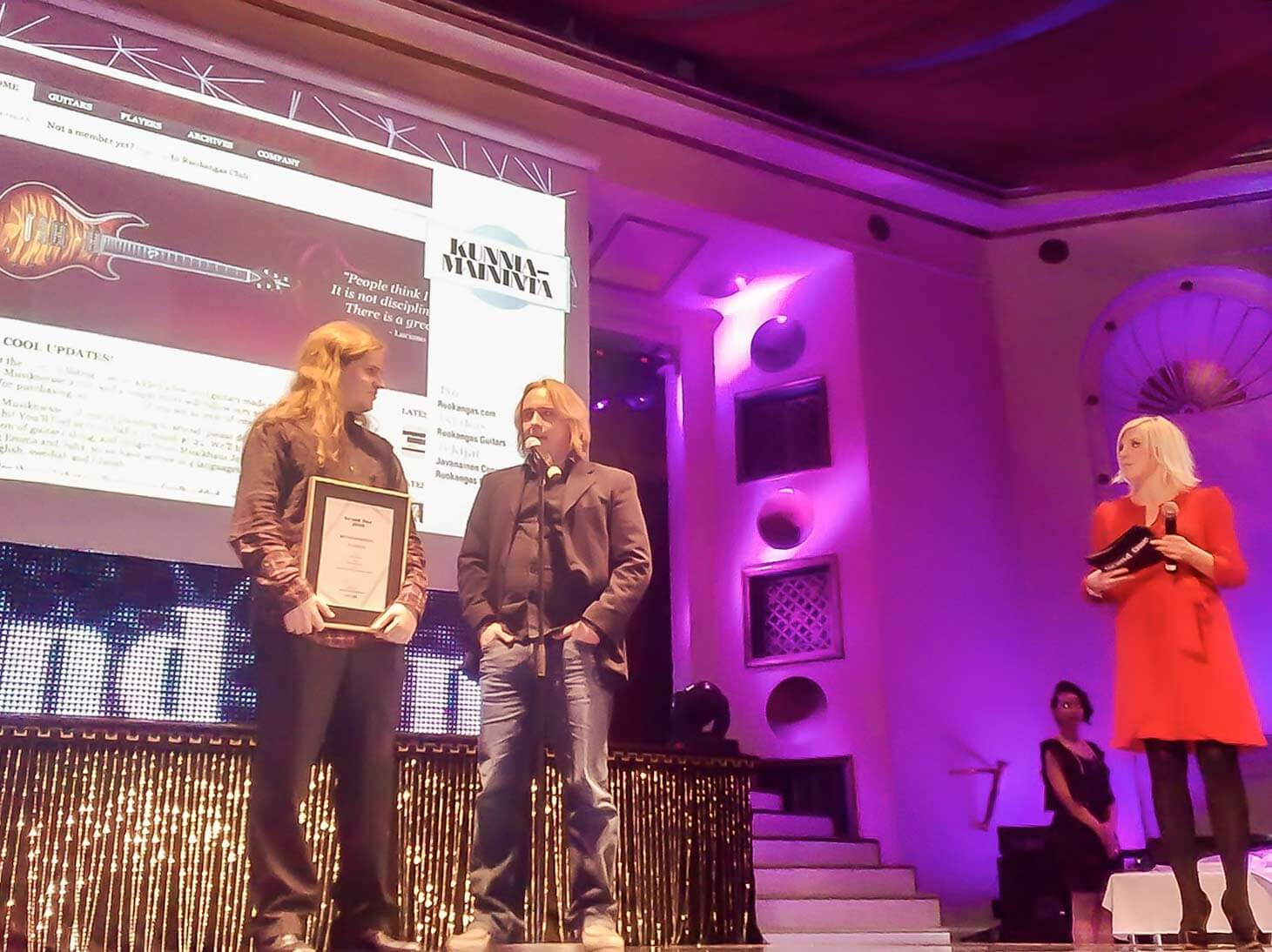
And for a moment, everything lined up.
The site was modern. The configurator wasn’t a gimmick anymore — it had become a real part of the business.
Most guitars were now ordered through it.
The team was growing. Emma had taken over social and YouTube. The whole thing had momentum.
Flash Player Is Dead
Against the hopes of many in the industry — Java and me included — Flash was shut out of Apple’s ecosystem.
First mobile. Then desktop.
The platform we had built Guitar Creator on was collapsing.
There was no workaround. No migration path.
Nothing was going to save it.
The Crash
By 2011, the downturn caught up with me.
I was let go from Valve. Not entirely unexpected — I had a reputation for being difficult.
I moved on. Fellowland. Then Scoopshot.
Neither lasted.
Unemployed. Again.
At the same time, Ruokangas was stuck.
The Flash-based Guitar Creator had become a liability. What once solved a real problem was now holding the business back.
I called Java.
Was there a way out?
He didn’t hesitate.
3D.
It was an absurd suggestion.
The scope alone made no sense for a company of Juha’s size. The technology was still evolving. There were no guarantees. No clean path forward.
And my track record didn’t exactly inspire confidence.
We had already bet on the wrong platform once.
Still, I brought it up.
Half-seriously.
I told Juha what it would take. More work than anything we had done before. Higher cost. Higher risk. No certainty it would even work.
His response was immediate.
“Enormous workload, too expensive, high risk of failure — what are we waiting for?”
That settled it.
I had to learn 3D.
One More Small Detail…
Summer 2015.
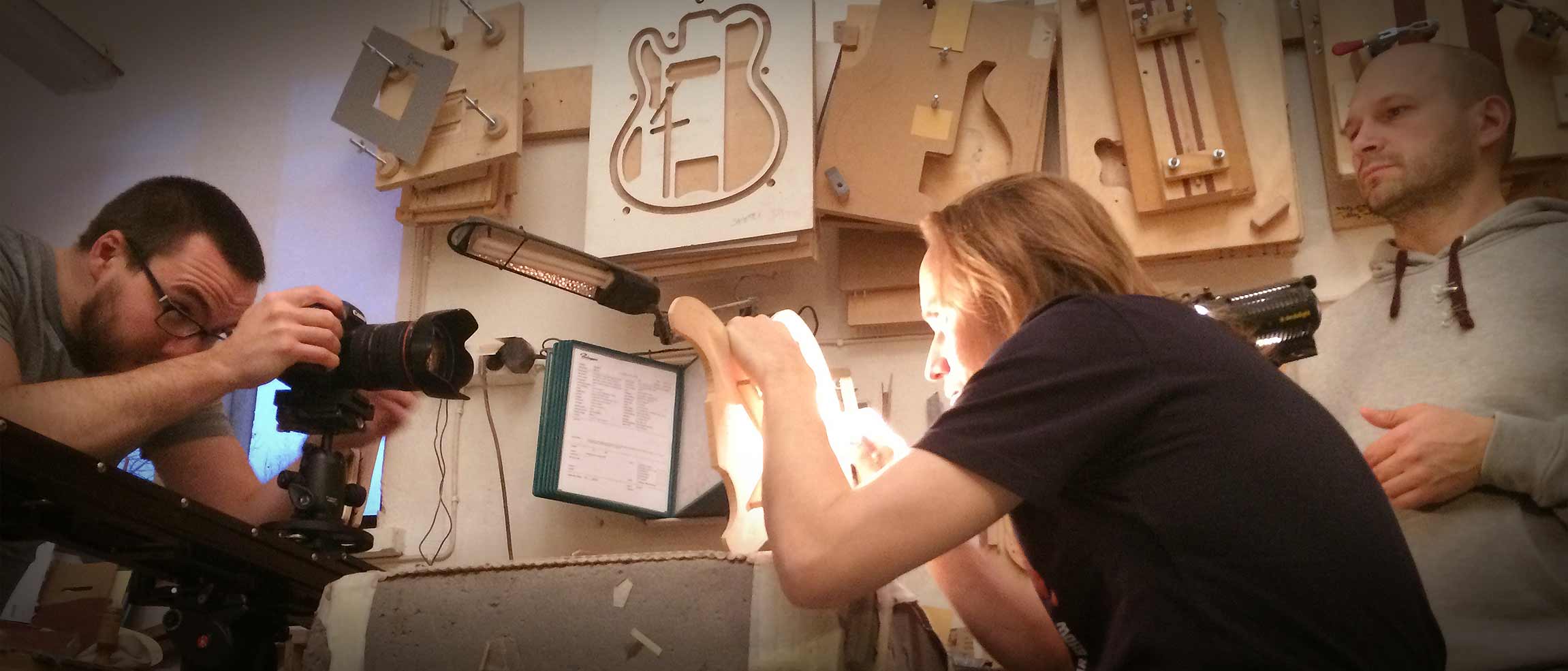
We met with Jarno Vesa — architect, guitarist, and the person who had agreed to model Juha’s guitars in 3D. He knew the instruments inside out. He had literally written the book on Finnish guitars.
Everything looked promising.
We aligned on the scope. The direction made sense. It finally felt like we had a path forward.
Then, just as we were wrapping up, Juha added one more detail.
Customers should be able to choose their exact flame birch grain pattern inside Guitar Creator.
A quick detour.
Flame birch is a rare Finnish wood. The grain twists unpredictably, and after heat treatment the surface reveals a deep, almost holographic pattern. No two pieces are alike.
That uniqueness is part of what defines a Ruokangas guitar.
We looked at each other.
No one in the room knew if this was even possible.
What Juha was asking for wasn’t just variation — it was an updatable library of unique wood patterns, rendered convincingly in 3D, across multiple platforms.
We didn’t have a solution.
We weren’t even sure there was one.
But by then, we knew how this worked.
Juha would describe the standard.
And somehow, you’d start believing it could be reached.
After a short discussion, we nodded.
Let’s build it.
If We Could Just… Harness the Lightning
In the previous project, I had stayed too close to what I already knew.
It cost me.
This time, I couldn’t afford to make the same mistake. The only sensible move was to step back — and trust the people who knew more than I did.
We put our faith in Java.
He tested everything.
Every platform. Every approach. Every possible way forward.
Unity wasn’t our first choice. I had been clear about one requirement: Guitar Creator had to run in the browser. And at the time, Unity couldn’t deliver the level of quality we needed there.
So Java kept going.
Day and night. No shortcuts.
At some point, I lost confidence.
It felt like we were stuck. No clear path. No working solution.
Like Marty McFly in 1955 — waiting for something that might never come together.
Then things shifted.
Unity had evolved. Java had revisited it.
When he showed us the demo, everything clicked.
The quality was there. The flexibility was there. iOS, Android, even VR — all within reach.
This was it.
The decision was obvious.
But it wasn’t clean.
Running Guitar Creator in the browser was technically possible — but barely. Performance was still behind. We would need time before it truly worked.
That was hard to accept.
Mobile was fine. But on desktop, it felt like a compromise.
Java didn’t see it that way.
I’ve always struggled with that moment — when a developer tells you what reality allows, and it doesn’t match what you had in mind.
Juha and I are the same in that sense. Stubborn. Reluctant to accept limits.
But this project forced us to recalibrate.
To trust expertise outside our own.
To understand that a different perspective is not always a compromise.
Sometimes, it’s the only way forward.
2023 update: Guitar Creator now runs in the browser without major issues.
And the direction we chose has finally caught up with the future.
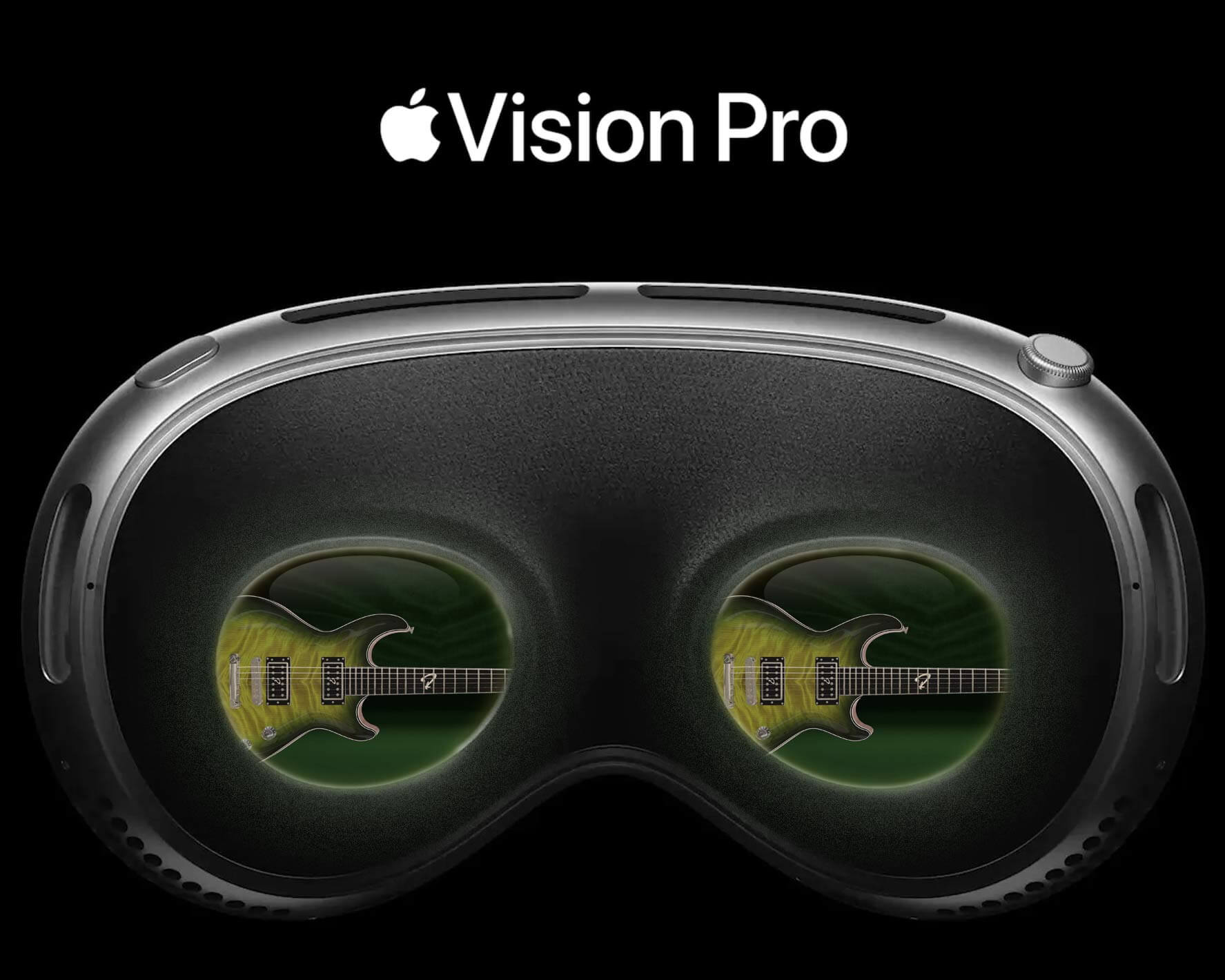
Apple Vision Pro Ready
n 2023, Apple announced AR/VR glasses that support Unity-built applications. When the glasses become available in 2024, Guitar Creator should run on them with minimal modifications.
The technology we chose has finally proved itself compatible with the future.
Celebrating Music
Technology was never the point.
It solved problems. It enabled things. But on its own, it meant very little.
The real question was why.
What drives someone to keep pushing at this level, year after year? What makes that level of effort feel necessary?
Juha’s company was clearly different.
You could feel it in the instruments. In the standards. In the way decisions were made.
But that difference wasn’t fully visible in the previous site.
It showed the product.
It didn’t yet communicate the conviction behind it.
That became the real goal.
Not just to present guitars — but to make the underlying intent visible.
To give Juha a way to tell his story in a way that matched the work itself.

Music Is the Only Universal Language
Music stays with us.
In moments of loss, it gives shape to something we can’t quite express.
In uncertainty, it steadies us.
In the middle of ordinary days, it shifts how everything feels.
And sometimes, when nothing else cuts through, it still does.
That’s why it matters.
Closing Words
A great guitar changes how you play.
It pushes you further. Makes you take risks you wouldn’t otherwise take. Shows you something you didn’t know was there.
That’s what this work needed to reflect.
I didn’t want the site to speak for Juha.
I wanted it to give him the space to speak in his own voice.
To let the people who play his guitars tell their stories.
To make the experience feel like it comes from the same place as the instruments themselves.
In the end, this was never about building a website.
It was about making something visible.
- The standard.
- The obsession.
The reason they keep showing up, day after day, doing the work at this level.
Because that’s what people are really responding to.
Not just the guitar.
But the commitment behind it.
Awards

FWA
Grand Prix
2019

FWA
Best Photography
2019

FWA
Best UX-Design
2019

GranD One
Honorary Mention - Information Design 2010

FWA
Best Copywriting
2019

Mindtrek
Win - Productive Innovations
2004
The Makers:
Design & Direction: Junnu Vuorela
Programming: Juha Javanainen / JCO Digital
Text Content: Juha Ruokangas / Ruokangas Guitars
Company Article: Mats Nermark / Fuzz
Videography: Matti Immonen & Markus Mutanen / Smak Film. Mika Tyyskä / Elektrik Pyjamas, Emma Elftorp / Ruokangas Guitars
Video Editing: Nina Ijäs, Matti Näränen, Emma Elftorp
Photography: Matti Immonen, Emma Elftorp, Kari Paukola
3D Modeling: Jarno Vesa
Animation: Mika Tyyskä
Music: Antti Paranko, Mika Tyyskä, Junnu Vuorela
Featured documentary artists: Juha Torvinen / Eppu Normaali, Aaron Kaplan, Jay Jay French / Twisted Sister, Antti Paranko, Mika Tyyskä / Mr. Fastfinger, Matias Kupiainen / Stratovarius, Markus Setzer